

Table of Contents
- Why Gym Shirt Prints Crack: The Root Causes
- How to Wash Graphic Tees to Prevent Fading and Cracking
- Storage and Environmental Factors
- How to Fix Cracked Print on Shirt
- What to Look for in High-Quality Screen Printed Apparel
- Conclusion
Last Updated: August 21, 2026
Why Gym Shirt Prints Crack: The Root Causes
When you invest in quality apparel from Forged In Sweaty Tees or any premium brand, discovering cracked prints after just a few washes is frustrating. The problem isn't random, it's the result of specific manufacturing and care failures that compound over time. Understanding why gym shirt prints crack helps you both prevent damage and identify quality during your purchase.
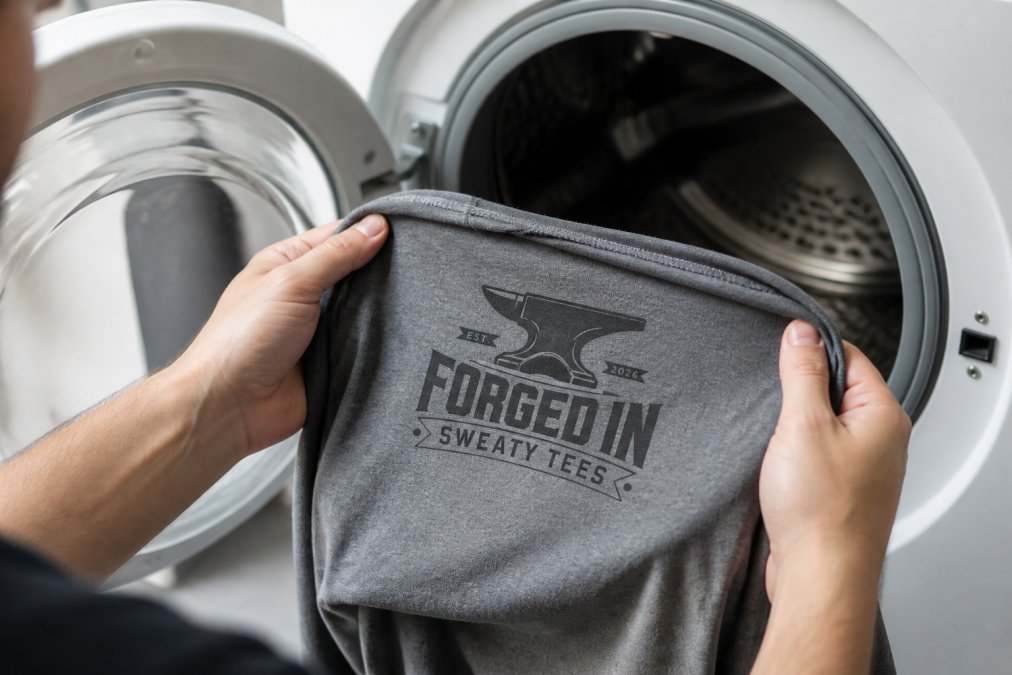
Cracking happens because screen-printed designs are essentially a layer of ink sitting on top of fabric. When that ink loses flexibility or the fabric beneath it moves in ways the ink can't accommodate, the result is visible stress fractures. The process starts during manufacturing and accelerates through improper washing and drying.
Improper Curing During Manufacturing
Screen printing relies on heat to cure the ink, transforming it from a wet coating into a durable finish (peer-reviewed research). Under-curing, when manufacturers don't apply enough heat or duration, leaves the ink partially liquid or tacky. This ink never fully bonds to the fabric, making it vulnerable to cracking from the first wash.
Over-curing creates the opposite problem. Excessive heat makes the ink brittle and inflexible. While the ink adheres firmly, it loses the elasticity needed to move with the fabric. When the shirt stretches or the fabric shifts, the rigid ink layer fractures.
The sweet spot requires precise temperature control and timing. Most quality manufacturers use curing conveyors that move garments through a heated chamber at specific speeds, ensuring consistent results. Budget manufacturers often skip this investment, relying on inconsistent spot-heating or insufficient dwell time.
Heat and Thermal Degradation
Heat doesn't just cure ink, it also degrades it over time. Plastisol ink, the most common choice for screen printing, contains polymers that break down when exposed to sustained high temperatures (peer-reviewed research). This thermal degradation makes the ink more brittle and prone to cracking.
The damage begins before the shirt even reaches you. Storage in hot warehouses or during shipping in uninsulated containers accelerates this process. Once you own the shirt, high-heat drying and washing in hot water continue the degradation cycle.
Each heat exposure compounds the problem. The ink becomes progressively less flexible, and mechanical stress from wearing and washing eventually exceeds what the weakened ink can handle. This is why gym shirts, which you're likely washing frequently and drying in hot conditions, fail faster than casual wear.
Ink Quality and Material Elasticity
Not all inks are created equal. Premium inks contain better plasticizers and resins that maintain flexibility across temperature ranges. Cheaper inks use lower-grade polymers that become rigid when cooled and brittle when heated.
The fabric itself matters equally. Tightly woven, high-quality cotton provides stable support for the ink layer. Cheap fabrics with loose weaves allow excessive fiber movement beneath the print, creating constant micro-stress on the ink. Stretchy fabrics like polyester blends require specially formulated flexible inks that can expand and contract with the material.
When low-quality ink meets low-quality fabric, cracking is nearly inevitable. The ink can't flex with the moving fibers, and the fibers don't provide consistent support. Forged In Sweaty Tees prioritizes premium materials and inks specifically because this combination prevents the degradation cycle from starting.
How to Wash Graphic Tees to Prevent Fading and Cracking
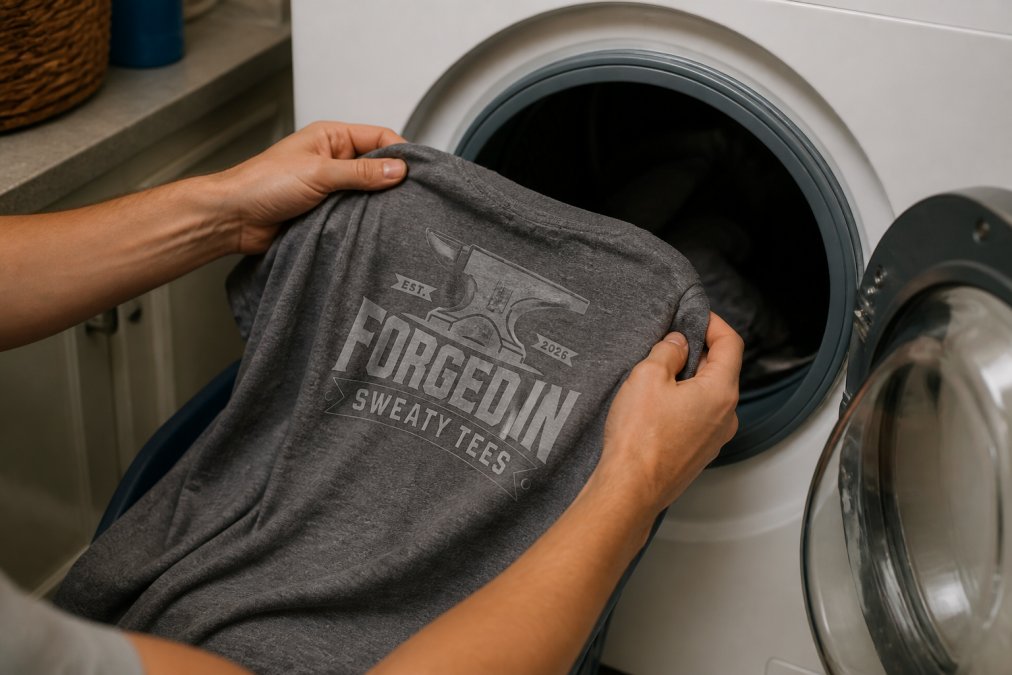
Your washing routine is where most damage happens. The mechanical action of washing machines, combined with heat and harsh chemicals, attacks the ink layer directly. Small changes to how you wash gym shirt prints crack can extend their life significantly.
Washing Temperature and Cycle Selection
Cold water is your first defense. Hot water accelerates thermal degradation of the ink and weakens the bond between ink and fabric (peer-reviewed research). Cold water washes remove dirt effectively while minimizing heat damage.
Use the gentle or delicate cycle, not normal or heavy duty. These cycles reduce mechanical agitation, which is the primary cause of cracking in already-weakened prints. The gentler motion gives the ink layer less stress during the wash.
Turn the shirt inside out before washing. This simple step protects the printed surface from direct contact with agitator fins and other garments. The inside-out approach reduces mechanical friction on the print while still allowing detergent to reach the fabric.
Detergent Types and Agitation Impact
Standard detergents often contain enzymes and harsh surfactants designed to break down tough stains. These same chemicals can degrade ink polymers. Use a mild, fragrance-free detergent formulated for delicate fabrics.
Avoid bleach and oxygen-based whiteners entirely. These oxidizing agents break down the chemical bonds in plastisol ink, causing fading and weakening the ink's adhesion to fabric. Even "color-safe" bleach alternatives can damage prints over time.
Reduce the amount of detergent you use. More detergent doesn't clean better, it just increases the chemical load on the ink and fabric. A smaller amount in cold water with a gentle cycle cleans effectively without excess damage.
Drying Methods: Air Dry vs. Tumble Dry
Air drying is the gold standard for print longevity. Line drying or laying flat eliminates heat exposure entirely and prevents the mechanical stress of tumble drying. The slower evaporation also allows the fabric to dry more evenly, reducing stress points.
If you must use a dryer, use the lowest heat setting and remove the shirt while still slightly damp. High heat accelerates thermal degradation and causes rapid moisture loss that stresses the ink layer. Even low heat applied repeatedly compounds the damage over time.
Never use a dryer on gym shirts you want to preserve. The combination of heat, mechanical tumbling, and repeated exposure creates the perfect conditions for accelerated cracking. The time saved isn't worth the shortened lifespan of your apparel.
Storage and Environmental Factors
Where and how you store your shirts matters as much as how you wash them. Environmental stress continues damaging prints even when the shirt isn't being worn.
Store gym shirts in a cool, dark place away from direct sunlight. UV exposure fades ink and degrades polymers, making the ink more brittle. A closet or drawer is ideal; avoid sunny windowsills or hot storage areas.
Humidity and temperature fluctuations cause fabric and ink to expand and contract at different rates. This repeated micro-movement stresses the ink layer. Maintain storage in a stable environment, not in attics or basements where temperature and moisture swing dramatically.
Fold rather than hang gym shirts with prints. Hangers create constant tension on the fabric, which transfers stress to the ink layer. Folding distributes weight evenly and eliminates this ongoing mechanical stress.
How to Fix Cracked Print on Shirt
Once print damage appears, your options depend on identifying what type of failure has occurred. Cracking, peeling, and fading are three distinct problems with different causes and different repair prospects.
Distinguishing Cracking, Peeling, and Fading
Cracking occurs when the ink layer develops visible stress fractures while still adhered to the fabric. The ink remains bonded but has lost flexibility, so the surface shows a web of fine lines or larger splits. Cracking is typically caused by over-curing, thermal degradation, or mechanical stress from washing and wearing.
Peeling occurs when the ink separates from the fabric entirely, lifting away in flakes or sheets. The ink itself may be intact, but the adhesive bond between ink and fabric has failed. Peeling usually results from under-curing during manufacturing, excessive heat during drying, or harsh detergents that degrade the ink-to-fabric interface.
Fading appears as color loss or discoloration without physical damage to the ink layer. The print remains intact and bonded but has lost vibrancy. Fading is caused by UV exposure, repeated washing in hot water, or use of bleach or oxidizing agents.
Examine the damaged area closely. If the surface shows a pattern of fine lines or fractures but the ink remains firmly attached, you have cracking. If the ink is lifting, flaking, or peeling away from the fabric, you have peeling. If the color has simply dulled or changed but the print feels intact, you have fading.
Repair Viability by Damage Type
Cracked prints with minor hairline fractures and no peeling can sometimes be stabilized temporarily. Fabric glue designed for textiles (such as flexible fabric adhesive) can be applied carefully along the crack to press the ink down and seal the fracture. Apply sparingly, press gently, and allow full curing per product instructions. This approach may extend the shirt's life by a few additional wears, but it is not a permanent fix, the underlying brittleness remains, and the crack will likely reopen with continued washing and wearing.
Peeling prints are much more difficult to repair because the bond between ink and fabric is already broken. Regluing the ink to the fabric is unreliable; the ink may re-peel during the next wash. Once peeling has begun, structural repair is not practical.
Faded prints cannot be repaired chemically. The color loss is permanent at the consumer level.
Professional Reprinting as an Alternative
For shirts with significant cracking or peeling, professional screen printing shops in your area may offer reprinting services. The printer will strip the old design (using solvents or abrasion) and apply a new print. This is a full replacement of the design, not a repair of the existing print. The reprinted design may look slightly different from the original, color match may not be exact, and the hand-feel or texture may differ depending on the ink and curing process used.
Cost for professional reprinting depends on design complexity and local labor rates. For a shirt, reprinting may not be economically justified unless the design has significant sentimental or functional value.
When to Replace vs. Repair
If the shirt is relatively new (within the first 10-15 wears) and the damage is minimal, repair or reprinting makes sense as a way to extend life and test whether the failure was due to manufacturing defect or user care. If the shirt is already several years old and showing multiple problem areas (cracking in multiple locations, fading, and peeling), replacement is usually the better choice.
Consider the value of the design. If the print represents something meaningful, a faith-inspired message, a commemorative event, or a design no longer in production, repair or reprinting preserves that connection and may justify the cost. If it's a basic graphic or a design you can easily replace, purchasing a new shirt is more practical.
Most importantly, use the failure as a diagnostic tool. If a shirt cracked despite proper care (cold-water washing, gentle cycle, air drying), the manufacturing or materials were substandard, and you should avoid that brand or product line in the future. If it cracked because of neglect (hot-water washing, high-heat drying, harsh detergents), adjust your care habits going forward to protect future purchases.
What to Look for in High-Quality Screen Printed Apparel
Preventing cracked prints starts with buying quality from the beginning. Several indicators separate durable apparel from shirts that will fail quickly.
Feel the print with your fingers. Quality prints have a smooth, uniform texture without rough edges or thick ink buildup. The ink should feel flexible, not stiff or brittle. Run your fingernail gently along the edge, quality prints have clean borders that don't flake.
Check the fabric beneath the print. Lift the shirt and hold it to light. You should see the weave clearly, indicating dense, quality fabric. Cheap fabric looks translucent or has visible loose weaves. The fabric should feel substantial and smooth, not thin or rough.
Examine the color consistency of the print. Professional screen printing produces even color saturation across the entire design. Patchy areas, color variation, or faded spots indicate inconsistent curing or low-quality ink.
Ask about the ink type and curing process. Manufacturers using premium plastisol inks and proper curing conveyors will tell you this proudly. Brands like Forged In Sweaty Tees invest in these details because they directly impact durability. If a manufacturer won't discuss their process, that's a red flag.
Look for print placement precision. The design should align perfectly with the garment, not skewed, off-center, or with uneven margins. Sloppy placement often indicates a rushed manufacturing process that cuts corners elsewhere.
Cracked prints on gym shirts don't happen by accident. They're the result of manufacturing shortcuts, improper curing, low-quality materials, and destructive washing habits. By understanding each cause, you can make smarter purchase decisions and protect your investment through proper care.
When you choose apparel designed with durability in mind, premium inks, quality fabrics, and proper curing, you're buying shirts that survive repeated washing and wearing. Forged In Sweaty Tees builds apparel with this commitment to longevity because your faith-inspired designs deserve to last. Pair that quality foundation with cold-water washing, gentle cycles, inside-out placement, and air drying, and your gym shirts will maintain their appearance through years of use.
The quality you can feel when you put on a well-made shirt is worth protecting. Start with the right choice at purchase, then maintain it with intentional care.
Frequently Asked Questions
Q: What causes gym shirt prints to crack after washing?
A: Gym shirt prints crack due to a combination of factors: improper curing during manufacturing, repeated mechanical stress from washing and wearing, exposure to high heat in dryers, and the natural movement of fabric during physical activity. Plastisol ink, while durable, loses flexibility when exposed to excessive heat or when the underlying fabric stretches. Cold water washing and air drying significantly reduce cracking risk compared to hot water and tumble drying.
Q: How do I prevent cracking on graphic tees during the washing process?
A: Turn your graphic tees inside out before washing to minimize direct friction with the drum. Use cold water on a gentle or delicate cycle, avoid high-agitation settings, and skip the fabric softener. Air dry whenever possible instead of using a tumble dryer, as heat accelerates ink degradation. Wash less frequently by rotating your shirts, and use mild detergents that won't strip the ink's flexibility. These practices preserve print adhesion and ink elasticity over time.
Q: Can you fix a cracked print on a shirt, or do you need to replace it?
A: Minor surface cracks can sometimes be managed with careful heat pressing or fabric glue designed for textiles, but once cracking begins, the ink's bond to the fabric is compromised. Deep cracks, peeling, or widespread damage typically cannot be fully restored to original quality. For gym apparel that receives regular wear and washing, replacement often makes more sense than repair. High-quality screen printed shirts with proper curing and premium ink are less prone to this issue from the start.
Q: Does the type of ink used affect how quickly prints crack?
A: Yes. Plastisol ink, the standard for screen printing, varies in quality and flexibility. Premium plastisol formulations with better elasticity resist cracking longer than budget alternatives. Proper curing temperature during manufacturing is critical, under-cured ink remains brittle and cracks easily, while over-cured ink loses flexibility. The fabric itself matters too: stretch fabrics like those used in gym wear require more flexible ink formulations to withstand the constant movement and fiber stress during workouts.
0 comments