

Table of Contents
- What You'll Need Before You Wash Graphic Tees
- Step-by-Step: How to Wash Graphic Tees to Prevent Fading
- Best Detergent for Graphic Tees
- Air Drying vs Machine Drying Graphic Shirts
- Care by Print Type: Screen Print, DTG, and Heat Transfer
- How to Fix Cracked Screen Print Before It Gets Worse
- Common Mistakes That Destroy Graphic Tees Fast
- Conclusion
Last Updated: August 16, 2026
What You'll Need Before You Wash Graphic Tees
Knowing how to wash graphic tees to prevent fading starts before you open the washing machine door. Most fading happens because people reach for whatever's under the sink without thinking twice.
Here's what to have ready:
- A mild, color-safe detergent formulated for delicate fabrics
- Cold water, non-negotiable
- A mesh laundry bag for extra print protection during agitation
- A clean drying rack or flat drying surface, not a hanger or dryer
- A clean, dry towel if you plan to lay the shirt flat
If you're in an area with hard water, mineral content can accelerate fiber breakdown and dull colors. A simple water softener tablet added to your wash load can make a real difference, especially for dark-colored shirts with detailed screen prints.
Step-by-Step: How to Wash Graphic Tees to Prevent Fading
The right process takes about five minutes of active effort.
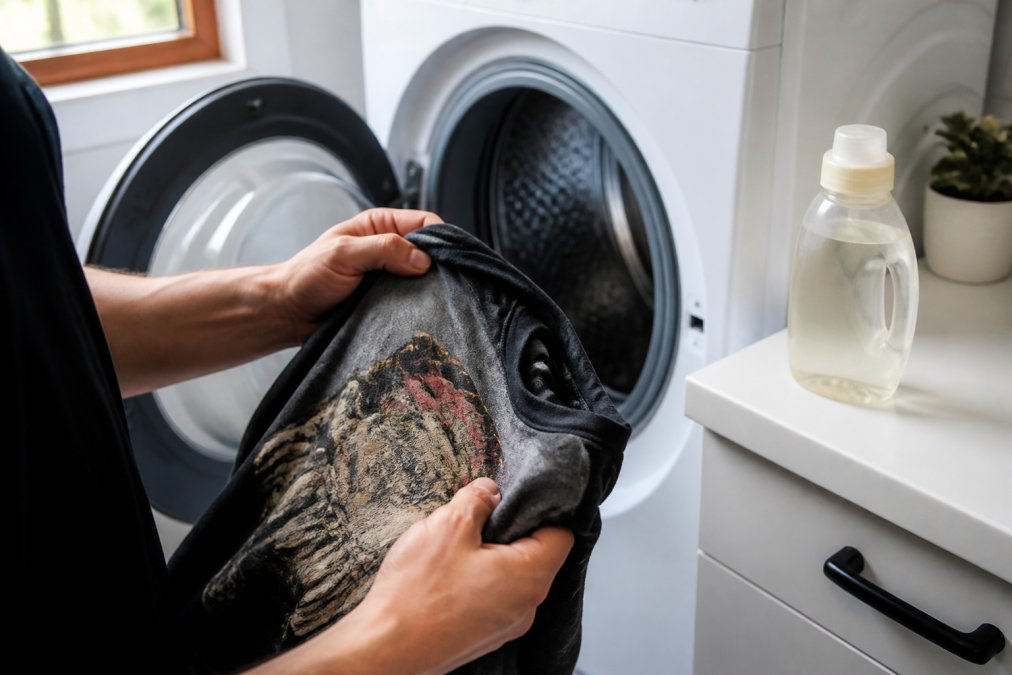
Step 1: Turn the Shirt Inside Out
Turn every graphic tee inside out before washing. This shields the printed surface from direct friction against other garments, the drum wall, and abrasive zippers or buttons. The fabric backing takes the agitation instead of the ink. For screen prints and heat transfer designs, that surface-level friction is what causes cracking and peeling to start.
Make it automatic: flip it inside out before it goes in the hamper.
Step 2: Separate Colors and Set Cold Water
Color bleeding is a real threat, particularly with dark or saturated graphic tees. Separate your wash load by color before you start.
Set your machine to cold water. Hot water causes fiber breakdown, shrinkage, and accelerated color fading. Cold water cycles preserve the dye in both the fabric and the ink. According to the American Cleaning Institute's fabric care guidance, cold water washing is one of the most effective ways to preserve garment color and extend the life of printed textiles.
Step 3: Choose the Gentle Cycle and Low Spin Speed
Select the gentle or delicate cycle on your machine. This reduces agitation intensity, which directly reduces friction against the print surface.
Low spin speed matters too. High spin speeds create centrifugal force that stretches and distorts fabric fibers, potentially warping the print shape. A slower spin cycle means less stress on the garment overall.
Step 4: Skip Fabric Softener and Bleach
Fabric softener coats textile fibers with a chemical film that breaks down the adhesion between ink and fabric over repeated washes, accelerating peeling on screen prints and heat transfers. Skip it entirely.
Bleach, in any form, degrades both dye and ink. It has no place in a graphic tee wash cycle.
Best Detergent for Graphic Tees
The best detergent for graphic tees is a mild, liquid formula with no added brighteners, enzymes, or bleaching agents. Powder detergents can leave residue that dulls colors over time. Liquid detergents dissolve more completely in cold water.
What to look for on the label:
- "Free and clear" or "fragrance-free" formulas tend to have fewer harsh additives
- Detergents marketed for delicates or dark colors are formulated to be gentler on dyes
- Avoid anything with "brightening" or "whitening" agents
What to avoid:
- Heavy-duty enzyme detergents designed for stain removal
- Any detergent listing optical brighteners in the ingredients
- Pods or packs containing built-in softeners or stain boosters
As noted in textile care research from the Textile Exchange, harsh detergent formulations are among the primary contributors to premature color loss in printed apparel. Using less detergent than recommended is also fine, most people overdose their machines.
Air Drying vs Machine Drying Graphic Shirts
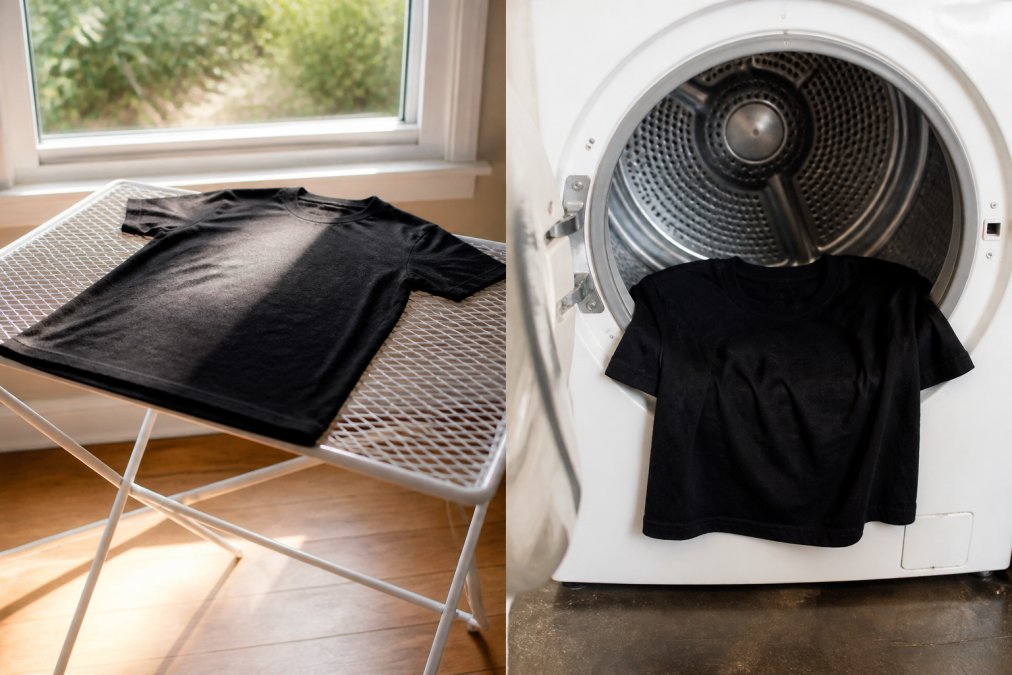
Air drying wins every time. Machine drying is the single biggest source of heat damage for graphic tees, and heat damage is permanent.
Drying Rack vs. Hanger: Why It Matters
Most people who air dry default to hanging shirts on a hanger. This is better than the dryer, but not optimal.
Hanging a wet shirt places all the garment's weight on the shoulder points. Wet fabric is heavier and more elastic than dry fabric, which means the shoulder seams stretch under that concentrated load. Over time, this distorts the shirt's shape.
A flat drying rack eliminates this problem. Lay the shirt flat with the print side facing down so air circulates underneath. The weight distributes evenly, the fabric dries without stretching, and the print surface isn't pressed against anything.
| Drying Method | Print Safety | Shape Preservation | Drying Time |
|---|---|---|---|
| Flat drying rack (print down) | Best | Best | Moderate |
| Wide padded hanger | Good | Good | Moderate |
| Wire hanger | Acceptable | Poor | Moderate |
| Tumble dry low heat | Poor | Acceptable | Fast |
| Tumble dry high heat | Worst | Poor | Fastest |
Care by Print Type: Screen Print, DTG, and Heat Transfer
Not all graphic tees are printed the same way, and each print type has slightly different vulnerabilities.
Screen print is the most durable when cared for properly. Ink is pressed through a mesh screen and sits on top of the fabric in a thick layer. The main enemies are heat and friction. Cracking starts when the ink layer dries out and loses flexibility from repeated heat exposure. Cold water washing, inside-out technique, and air drying extend screen print life significantly.
Direct-to-garment (DTG) printing works like an inkjet printer, ink is sprayed directly into the fabric fibers rather than sitting on top. DTG prints feel softer and show more detail, but they're more sensitive to harsh detergents and agitation. The ink bonds with the fiber at a molecular level, so anything that disrupts the fiber structure will visibly fade a DTG print faster than a screen print.
Heat transfer prints are applied using heat and pressure to bond a printed film to the fabric surface. These are the most sensitive to both heat and friction. Washing inside out is especially critical, and machine drying should be avoided entirely.
According to garment care standards from the American Association of Textile Chemists and Colorists, proper laundering technique specific to print type is the most significant factor in long-term print preservation.
How to Fix Cracked Screen Print Before It Gets Worse
Cracked screen print is fixable in the early stages. Once the ink has peeled away entirely, that area is gone. Catch it early and you can stabilize the print and extend the shirt's life considerably.
The most common approach is to use a heat press or household iron at a very low setting (never steam) with a thin pressing cloth between the iron and the print. The gentle heat reactivates the plastisol ink and helps it rebond to the fabric surface. Press for 10-15 seconds with light, even pressure.
A few important rules when ironing graphic tees:
- Always iron on the reverse side (inside out) when possible
- Use a pressing cloth, never apply an iron directly to a print
- Set the iron to the lowest heat setting that produces results
- Never use the steam function
- Allow the shirt to cool completely before wearing or folding
The cracking almost always starts at stress points: the outer edges of a design, areas that flex with body movement, and spots that make contact with the dryer drum. Catching micro-cracks early is what separates a shirt that lasts five years from one that looks worn out after twelve months.
Common Mistakes That Destroy Graphic Tees Fast
Most graphic tee damage is self-inflicted.
Washing in hot water. The most common and most damaging error. Hot water causes simultaneous fiber breakdown, shrinkage, and dye fading.
Skipping the inside-out step. People forget, or they think it doesn't matter for a quick wash. It matters every single time.
Tossing graphic tees in with jeans or towels. Rough fabrics, metal hardware, and heavy textiles create friction that acts like sandpaper on print surfaces during a wash cycle.
Using too much detergent. Residue is a real problem. Less is more.
Drying on high heat because you're in a hurry. Heat damage is cumulative and permanent. Do it repeatedly and the print will crack within months.
Storing shirts while still slightly damp. This causes mildew in the fabric and can degrade both the fiber and the ink over time.
Ironing directly on the print. Even low heat applied directly without a pressing cloth can cause bubbling, discoloration, or adhesion failure.
Treat the garment right and the print stays sharp. Cut corners on care and you're shortening the life of something worth keeping.
Frequently Asked Questions
Should you wash graphic tees before wearing them for the first time?
Yes. Washing before the first wear removes manufacturing residue and excess dye that can bleed onto other clothes. Turn the shirt inside out, use cold water on a gentle cycle with a mild detergent, and air dry. This first wash also helps you confirm the print holds up under your specific water and machine conditions before committing the shirt to a regular rotation.
Can you put graphic tees in the dryer?
You can, but heat is the fastest way to crack a screen print or fade a direct-to-garment design. If you use a dryer, select the lowest heat setting and remove the shirt while it is still slightly damp. Air drying flat or on a rack is always the safer option for print longevity. Repeated high-heat tumble drying causes fiber breakdown and shrinkage that shortens the life of any graphic tee.
What is the best detergent for graphic t-shirts?
A mild, dye-free liquid detergent works best for graphic tees. Powder detergents can leave residue that scrapes against print surfaces during agitation. Enzyme-based detergents designed for stain removal are effective on sweat and odor but should be used sparingly on heavily printed areas. Avoid any detergent that contains bleach or optical brighteners, as both degrade screen print and heat transfer inks over repeated washes.
How do you stop t-shirt graphics from fading over time?
The biggest factors are heat, agitation, and harsh chemicals. Always wash graphic tees inside out in cold water on a gentle cycle. Use a mild liquid detergent, skip fabric softener, and avoid bleach entirely. Air dry when possible. If your tap water is hard, the mineral content can dull colors over time, a small amount of white vinegar in the rinse cycle helps counteract mineral buildup without damaging the print.
Graphic tee care isn't complicated, but it does require consistency. If you're investing in quality apparel that reflects your values and holds up through workouts, street wear, and everything in between, the wash routine is where that investment either pays off or gets wasted. Forged In Sweaty Tees designs shirts built for exactly that kind of daily use, with quality you can feel from the first wear. Shop the Standard and keep your gear looking as sharp as the day it arrived.
0 comments